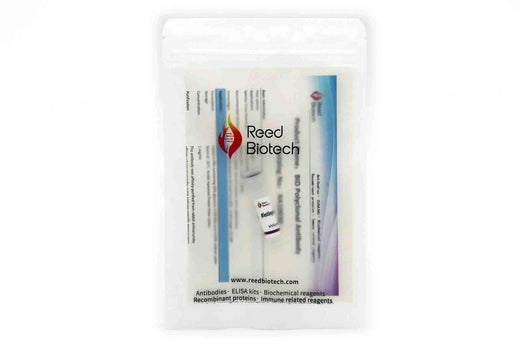
IR (Phospho Tyr999) polyclonal antibody; host Rabbit; reactivity Human, Mouse, Rat
Know who made it. See the evidence. Buy through one marketplace.
catalytic activity:ATP + a [protein]-L-tyrosine = ADP + a [protein]-L-tyrosine phosphate.,disease:Defects in INSR are the cause of familial hyperinsulinemic hypoglycemia 5 (HHF5) [MIM:609968]. Familial hyperinsulinemic hypoglycemia [MIM:256450], also referred to as congenital hyperinsulinism, nesidioblastosis, or persistent hyperinsulinemic hypoglycemia of infancy (PPHI), is the most common cause of persistent hypoglycemia in infancy and is due to defective negative feedback regulation of insulin secretion by low glucose levels.,disease:Defects in INSR are the cause of insulin resistance (Ins resistance) [MIM:125853].,disease:Defects in INSR are the cause of insulin-resistant diabetes mellitus with acanthosis nigricans type A (IRAN type A) [MIM:610549]. This syndrome is characterized by the association of severe insulin resistance (manifested by marked hyperinsulinemia and a failure to respond to exogenous insulin) with the skin lesion acanthosis nigricans and ovarian hyperandrogenism in adolescent female subjects. Women frequently present with hirsutism, acne, amenorrhea or oligomenorrhea, and virilization. This syndrome is different from the type B that has been demonstrated to be secondary to the presence of circulating autoantibodies against the insulin receptor.,disease:Defects in INSR are the cause of leprechaunism [MIM:246200]; also known as Donohue syndrome. Leprechaunism represents the most severe form of insulin resistance syndrome, characterized by intrauterine and postnatal growth retardation and death in early infancy. Inheritance is autosomal recessive.,disease:Defects in INSR are the cause of Rabson-Mendenhall syndrome [MIM:262190]; also known as Mendenhall syndrome. It is a severe insulin resistance syndrome characterized by insulin-resistant diabetes mellitus with pineal hyperplasia and somatic abnormalities. Typical features include coarse, senile-appearing facies, dental and skin abnormalities, abdominal distension, and phallic enlargement. Inheritance is autosomal recessive.,disease:Defects in INSR may be associated with noninsulin-dependent diabetes mellitus (NIDDM) [MIM:125853]; also known as diabetes mellitus type 2.,enzyme regulation:Autophosphorylation activates the kinase activity.,function:This receptor binds insulin and has a tyrosine-protein kinase activity. Isoform Short has a higher affinity for insulin. Mediates the metabolic functions of insulin. Binding to insulin stimulates association of the receptor with downstream mediators including IRS1 and phosphatidylinositol 3'-kinase (PI3K). Can activate PI3K either directly by binding to the p85 regulatory subunit, or indirectly via IRS1. When present in a hybrid receptor with IGF1R, binds IGF1. PubMed:12138094 shows that hybrid receptors composed of IGF1R and INSR isoform Long are activated with a high affinity by IGF1, with low affinity by IGF2 and not significantly activated by insulin, and that hybrid receptors composed of IGF1R and INSR isoform Short are activated by IGF1, IGF2 and insulin. In contrast, PubMed:16831875 shows that hybrid receptors composed of IGF1R and INSR isoform Long and hybrid receptors composed of IGF1R and INSR isoform Short have similar binding characteristics, both bind IGF1 and have a low affinity for insulin.,online information:Insulin receptor entry,PTM:After being transported from the endoplasmic reticulum to the Golgi apparatus, the single glycosylated precursor is further glycosylated and then cleaved, followed by its transport to the plasma membrane.,PTM:Autophosphorylated on tyrosine residues in response to insulin.,PTM:Phosphorylation of Tyr-999 is required for IRS1- and SHC1-binding.,similarity:Belongs to the protein kinase superfamily. Tyr protein kinase family. Insulin receptor subfamily.,similarity:Contains 1 protein kinase domain.,similarity:Contains 3 fibronectin type-III domains.,subunit:Tetramer of 2 alpha and 2 beta chains linked by disulfide bonds. The alpha chains contribute to the formation of the ligand-binding domain, while the beta chains carry the kinase domain. Interacts with SORBS1 but dissociates from it following insulin stimulation. Binds SH2B2. Interacts with the PTB/PID domains of IRS1 and SHC1 in vitro when autophosphorylated on tyrosine residues. The sequences surrounding the phosphorylated NPXY motif contribute differentially to either IRS1 or SHC1 recognition. Interacts with the SH2 domains of the 85 kDa regulatory subunit of PI3K (PIK3R1) in vitro, when autophosphorylated on tyrosine residues. Interacts with SOCS7. Forms a hybrid receptor with IGF1R, the hybrid is a tetramer consisting of 1 alpha chain and 1 beta chain of INSR and 1 alpha chain and 1 beta chain of IGF1R.,tissue specificity:Found as a hybrid receptor with IGF1R in muscle, heart, kidney, adipose tissue, skeletal muscle, hepatoma, fibrobasts, spleen and placenta (at protein level). Isoform Long and isoform Short are expressed in the peripheral nerve, kidney, liver, striated muscle, fibroblasts and skin. Isoform Short is expressed also in the spleen and lymphoblasts.,
Fully tested in-house by ABMIUM, or supported by an advanced validation report from a partner reviewed by ABMIUM. Highest confidence. Non-conformities fully supported under the ABMIUM Product Promise.
Quality verified. Independent collaborator or expected-performance data available. Product meets ABMIUM quality standards.
Expected to work based on structural and biochemical data. Not yet directly tested by ABMIUM or a collaborator. No non-conformity support for this combination.
Not recommended for this application or species/sample combination. This may indicate either evidence of unsuitability or that the combination has not been tested and therefore cannot currently be recommended.
Evidence status by application and model.
| Species / reactivity | WB | ELISA |
|---|---|---|
| Human,Mouse,Rat |
This product is manufactured by Reed Biotech and sold through ABMIUM without relabelling.
ABMIUM supports global orders. Availability, shipping requirements and applicable import arrangements are confirmed before fulfilment where required.
Yes. Send your target, sample, application and experimental conditions through ABMIUM MATCH or technical support.
Unless the listing expressly states otherwise, ABMIUM products are supplied for research use only and are not for diagnostic or therapeutic use.