
![Anti-Human Bad Antibody [A1264] - ABMIUM](http://www.abmium.com/cdn/shop/files/SJV5RGQE.jpg?v=1781563299&width=520)
ElabscienceABMIUM Verified™
Anti-Human Bad Antibody [A1264]
SKU: ABM860-1Primary Antibodies
- Target
- Bad
- Host
- Rabbit
- Clonality
- Monoclonal
- Reactivity
- Human
- Applications
- WB
From£89.60£112.00
Save 20%
Available to orderABMIUM target intelligence
BCL2 associated agonist of cell death
BCL2 associated agonist of cell death (BAD) is a pro-apoptotic BH3-only BCL2-family regulator whose activity is strongly controlled by phosphorylation. When active, BAD can engage anti-apoptotic BCL2-family proteins and shift mitochondrial signalling toward intrinsic apoptosis. This page groups ABMIUM catalogue reagents for BAD signalling and cell-death research.
Read full target overview
![Anti-Human/Mouse/Rat Bad Antibody [B746] - ABMIUM](http://www.abmium.com/cdn/shop/files/WNYpjR1Q.jpg?v=1781565300&width=520)

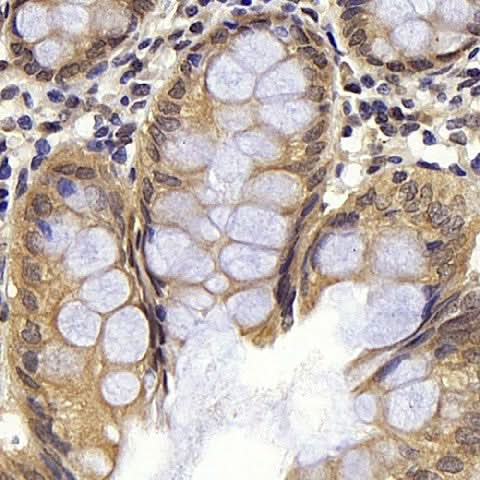


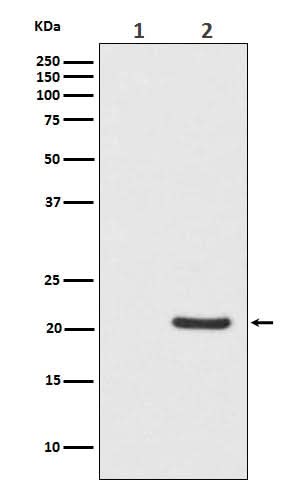
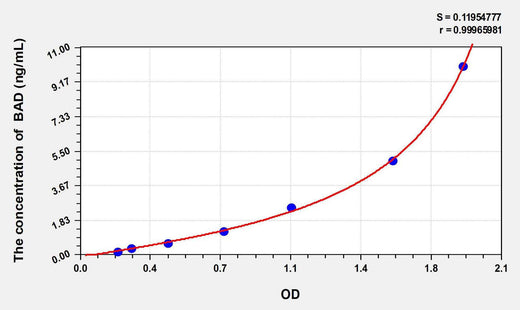

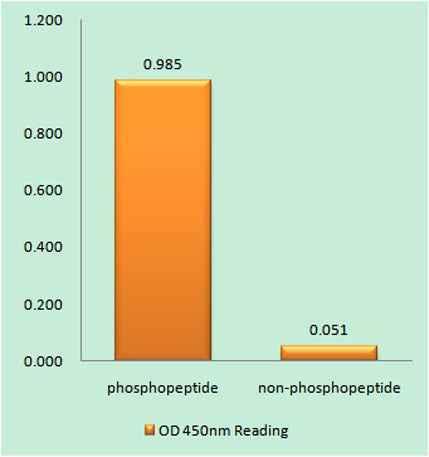
Research context & evidence
Target information is kept separate from product-level validation so you can review the biology and the reagent evidence independently.
BAD is regulated by phosphorylation at multiple serine residues. Survival signalling can promote phosphorylated BAD association with 14-3-3 proteins, limiting its pro-apoptotic activity. Dephosphorylated BAD can bind anti-apoptotic BCL2-family proteins such as BCL-XL and BCL2, favouring activation of the mitochondrial apoptosis programme.
BAD is commonly studied as a phosphorylation-sensitive link between survival kinase pathways and mitochondrial apoptosis. Useful experimental questions include total versus phospho-BAD abundance, stress- or growth-factor-dependent phosphorylation, subcellular association and downstream apoptotic responses.
Names used across publications, databases and supplier catalogues.