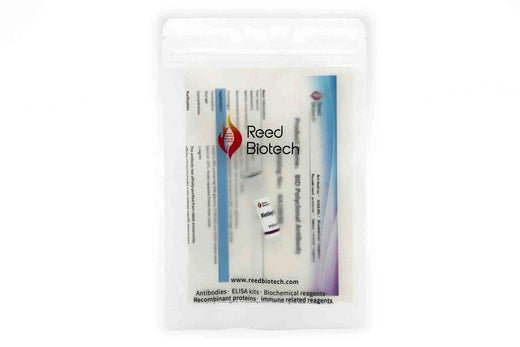
CUL5 polyclonal antibody; host Rabbit; reactivity Human, Mouse, Rat
Know who made it. See the evidence. Buy through one marketplace.
function:Core component of multiple SCF-like ECS (Elongin-Cullin 2/5-SOCS-box protein) E3 ubiquitin-protein ligase complexes, which mediate the ubiquitination and subsequent proteasomal degradation of target proteins. As a scaffold protein may contribute to catalysis through positioning of the substrate and the ubiquitin-conjugating enzyme. The functional specificity of the E3 ubiquitin-protein ligase complex depends on the variable substrate recognition component. ECS(SOCS1) seems to direct ubiquitination of JAk2. Seems to be involved poteosomal degradation of p53/TP53 stimulated by adenovirus E1B-55 kDa protein. May form a cell surface vasopressin receptor.,pathway:Protein modification; protein ubiquitination.,PTM:Neddylated. Deneddylated via its interaction with the COP9 signalosome (CSN) complex.,similarity:Belongs to the cullin family.,subunit:Component of multiple ECS (Elongin BC-CUL2/5-SOCS-box protein) E3 ubiquitin-protein ligase complexes formed of CUL5, Elongin BC (TCEB1 and TCEB2), RBX2 and a variable SOCS box domain-containing protein as substrate-specific recognition component. Component of the probable ECS(LRRC41) complex with the substrate recognition component LRRC41. Component of the probable ECS(SOCS1) complex with the substrate recognition component SOCS1. Component of the probable ECS(WSB1) complex with the substrate recognition subunit WSB1. Component of the probable ECS(SOCS3) complex with the substrate recognition component SOCS3. Component of the probable ECS(SPSB1) complex with the substrate recognition component SPSB1. Component of the probable ECS(SPSB2) complex with the substrate recognition component SPSB2. Component of the probable ECS(SPSB4) complex with the substrate recognition component SPSB4. Component of the probable ECS(RAB40C) complex with the substrate recognition subunit RAB40C. May also form complexes containing CUL5, elongin BC complex (TCEB1 and TCEB2), RBX1 and TCEB3. May also form complexes containing CUL5, Elongin BC (TCEB1 and TCEB2), RBX1 and VHL. The substrate recognition component can also be a viral protein such as HIV Vif, or human adenovirus 5 E1B large T-antigen and E4-orf6. Interacts with RNF7/RBX2, LRRC41, SOCS3, SPSB1, SPSB2, SPSB4 and RAB40C. Interacts with ASB1, ASB2, ASB6, ASB7 and ASB12.,
Fully tested in-house by ABMIUM, or supported by an advanced validation report from a partner reviewed by ABMIUM. Highest confidence. Non-conformities fully supported under the ABMIUM Product Promise.
Quality verified. Independent collaborator or expected-performance data available. Product meets ABMIUM quality standards.
Expected to work based on structural and biochemical data. Not yet directly tested by ABMIUM or a collaborator. No non-conformity support for this combination.
Not recommended for this application or species/sample combination. This may indicate either evidence of unsuitability or that the combination has not been tested and therefore cannot currently be recommended.
Evidence status by application and model.
| Species / reactivity | WB | ELISA |
|---|---|---|
| Human,Mouse,Rat |
This product is manufactured by Reed Biotech and sold through ABMIUM without relabelling.
ABMIUM supports global orders. Availability, shipping requirements and applicable import arrangements are confirmed before fulfilment where required.
Yes. Send your target, sample, application and experimental conditions through ABMIUM MATCH or technical support.
Unless the listing expressly states otherwise, ABMIUM products are supplied for research use only and are not for diagnostic or therapeutic use.