BiologyBiological function
Adenosine kinase (ADK) catalyses ATP-dependent phosphorylation of adenosine at the 5′ position to form AMP. By removing free adenosine, ADK contributes to regulation of extracellular adenosine and intracellular adenine-nucleotide pools. Reviewed UniProt also supports activity toward modified adenosines, linking the enzyme to clearance of modified nucleosides generated during RNA turnover.
Experimental contextResearch context
ADK is studied in purine and adenosine metabolism, nucleotide homeostasis and biological systems shaped by adenosine signalling. Experimental interpretation should distinguish target-level enzyme biology from reagent-specific performance; select ABMIUM products by species, sample type, assay format, application and product-level validation.
IdentifiersAlternative names
Names used across publications, databases and supplier catalogues.
Adenosine kinaseAK

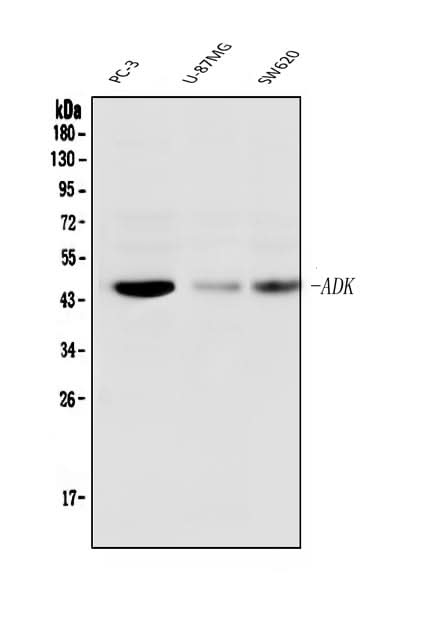
![Anti-Human/Rat/Mouse ADK Antibody [A564] - ABMIUM](http://www.abmium.com/cdn/shop/files/2V3OTU22.jpg?v=1781567531&width=520)