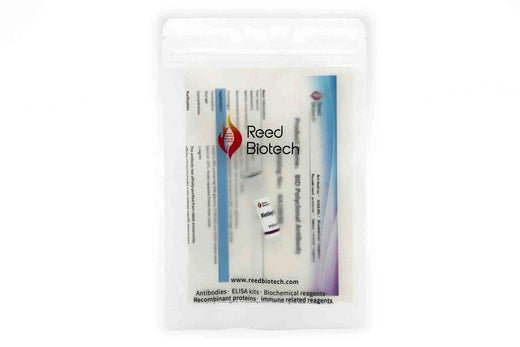
CRBB3 polyclonal antibody; host Rabbit; reactivity Human, Mouse, Rat
Know who made it. See the evidence. Buy through one marketplace.
Crystallins are separated into two classes: taxon-specific, or enzyme, and ubiquitous. The latter class constitutes the major proteins of vertebrate eye lens and maintains the transparency and refractive index of the lens. Since lens central fiber cells lose their nuclei during development, these crystallins are made and then retained throughout life, making them extremely stable proteins. Mammalian lens crystallins are divided into alpha, beta, and gamma families; beta and gamma crystallins are also considered as a superfamily. Alpha and beta families are further divided into acidic and basic groups. Seven protein regions exist in crystallins: four homologous motifs, a connecting peptide, and N- and C-terminal extensions. Beta-crystallins, the most heterogeneous, differ by the presence of the C-terminal extension (present in the basic group, none in the acidic group). Beta-crystallins form aggregates of different sizes and are able to self-associate to form dimers or to form heterodimers with other beta-crystallins. This gene, a beta basic group member, is part of a gene cluster with beta-A4, beta-B1, and beta-B2. Mutations in this gene result in cataract congenital nuclear autosomal recessive type 2. [provided by RefSeq, Feb 2013],
Fully tested in-house by ABMIUM, or supported by an advanced validation report from a partner reviewed by ABMIUM. Highest confidence. Non-conformities fully supported under the ABMIUM Product Promise.
Quality verified. Independent collaborator or expected-performance data available. Product meets ABMIUM quality standards.
Expected to work based on structural and biochemical data. Not yet directly tested by ABMIUM or a collaborator. No non-conformity support for this combination.
Not recommended for this application or species/sample combination. This may indicate either evidence of unsuitability or that the combination has not been tested and therefore cannot currently be recommended.
Evidence status by application and model.
| Species / reactivity | WB |
|---|---|
| Human,Mouse,Rat |
This product is manufactured by Reed Biotech and sold through ABMIUM without relabelling.
ABMIUM supports global orders. Availability, shipping requirements and applicable import arrangements are confirmed before fulfilment where required.
Yes. Send your target, sample, application and experimental conditions through ABMIUM MATCH or technical support.
Unless the listing expressly states otherwise, ABMIUM products are supplied for research use only and are not for diagnostic or therapeutic use.