ABMIUM target intelligence

ADK

adenosine kinase

Adenosine kinase (ADK; also called AK) is an ATP-dependent enzyme that phosphorylates adenosine and helps control cellular and extracellular adenosine availability. Human ADK is represented by NCBI Gene 132 and reviewed UniProtKB P55263, with related ABMIUM catalogue reagents for research use.

Read full target overview
OrganismMultiple species; representative: Homo sapiens (Human) NCBI Gene132 UniProtP55263

ADK products

Need help?Ask a scientist
Loading… products
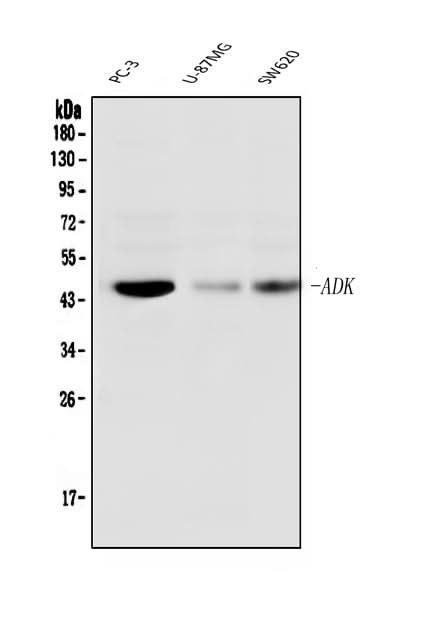
Anti-ADK Antibody Picoband® Boster Bio
Boster BioABMIUM Verified™

Anti-ADK Antibody Picoband®

SKU: ABM21500-1Primary Antibodies
Target
Adenosine kinase
Host
Rabbit
Clonality
Polyclonal
Reactivity
Human, Mouse, Rat
Applications
ELISA, Flow Cytometry, IF/ICC, IHC, IHC-P, WB
From£278.80£328.00 Save 15%
Available to order
Comparing

Research context & evidence

About ADK

Target information is kept separate from product-level validation so you can review the biology and the reagent evidence independently.

Biology

Biological function

Adenosine kinase (ADK) catalyses ATP-dependent phosphorylation of adenosine at the 5′ position to form AMP. By removing free adenosine, ADK contributes to regulation of extracellular adenosine and intracellular adenine-nucleotide pools. Reviewed UniProt also supports activity toward modified adenosines, linking the enzyme to clearance of modified nucleosides generated during RNA turnover.

Experimental context

Research context

ADK is studied in purine and adenosine metabolism, nucleotide homeostasis and biological systems shaped by adenosine signalling. Experimental interpretation should distinguish target-level enzyme biology from reagent-specific performance; select ABMIUM products by species, sample type, assay format, application and product-level validation.

Identifiers

Alternative names

Names used across publications, databases and supplier catalogues.

Adenosine kinaseAK