
ELISA Kit supplied by Boster Bio Read more ›

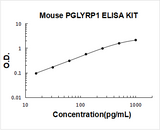
Mouse PGLYRP1/Pgrps ELISA Kit PicoKine® is a research-use ELISA kit from Boster Bio for measuring Peptidoglycan recognition protein 1 in Cell culture supernatant, serum and plasma (heparin, EDTA). samples from Mouse. Use the listed assay range, sample guidance and protocol documents to assess suitability for the intended study.
Mouse PGLYRP1/Pgrps ELISA Kit PicoKine® (96 Tests). Quantitate Mouse Pglyrp1 in cell culture supernatants, serum and plasma (heparin, EDTA). Sensitivity: 10 pg/ml. The brand Picokine indicates this is a premium quality ELISA kit. Each Picokine kit delivers precise quantification, high sensitivity, and excellent reproducibility. Only our most reliable and effective kits qualify as Picokine, guaranteeing top-tier results for your assays.Peptidoglycan recognition protein 1, also known as TAG7, is a protein that in humans is encoded by the PGLYRP1 gene. The PGLYRP1 gene is highly expressed in bone marrow, circulating Polymorphonuclear leukocytes (PMLs), and in the corneal epithelium. The PGLYRP1 protein is primarily found in the granules of PMLs. The PGLYRP1 protein plays an important role in the innate immune response. It is bactericidal against gram-positive bacteria such as S. aureus, S. epidermidis, and L. monocytogenes and generally has proinflammatory effects, inducing TNF-a and IFN-g in many tissues. PGLYRP-1 is also known to form a cytotoxic complex with HSP-70, suggesting it may also have a role in anti-cancer defense. As a pathogen recognition protein with antimicrobial properties, PGLYRP-1 is suspected to play an important role in maintaining the gut microbial flora.
| Collaborator | Boster Bio |
| Partner model | EK1618 |
| Target | Peptidoglycan recognition protein 1 |
| Reactivity | Mouse |
| Applications | ELISA |
| Cross-reactivity | There is no detectable cross-reactivity with other relevant proteins. |
| Immunogen | Expression system for standard: NS0; Immunogen sequence: F19-E182 |
| Sample types | Cell culture supernatant,serum and plasma (heparin,EDTA). |
| Detection range | 15.6 pg/ml - 1,000 pg/ml |
| Sensitivity | <10 pg/ml |
| Purity | Natural and recombinant mouse PGLYRP1 |
| Shelf life | Store at 4℃ for 6 months, at -20℃ for 12 months. Avoid multiple freeze-thaw cycles (Ships with gel ice, can store for up to 3 days in room temperature. Freeze upon receiving.) |
| Availability | Available |
Collaborator meets ABMIUM quality standards and overall product performance standards have been met.
For research applications. Not for diagnostic use.
No customer reviews yet.
