
GCG rabbit pAb from ELK Biotechnology Read more ›

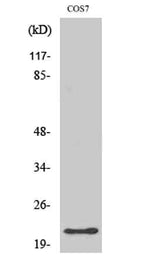
GCG rabbit pAb is a research-use antibody from ELK Biotechnology for studying Glucagon in WB, IHC, IF, ELISA workflows with listed reactivity for Human, Mouse, Rat, Monkey. Specifications and supporting documents below should be reviewed when planning the experiment.
The protein encoded by this gene is actually a preproprotein that is cleaved into four distinct mature peptides. One of these, glucagon, is a pancreatic hormone that counteracts the glucose-lowering action of insulin by stimulating glycogenolysis and gluconeogenesis. Glucagon is a ligand for a specific G-protein linked receptor whose signalling pathway controls cell proliferation. Two of the other peptides are secreted from gut endocrine cells and promote nutrient absorption through distinct mechanisms. Finally, the fourth peptide is similar to glicentin, an active enteroglucagon. [provided by RefSeq, Jul 2008],
| Specificity | GCG Polyclonal Antibody detects endogenous levels of GCG protein. |
|---|---|
| Validation evidence captions | Western Blot analysis of various cells using GCG Polyclonal Antibody | Immunofluorescence analysis of NIH/3T3 cells, using Glucagon Antibody. The picture on the right is blocked with the synthesized peptide. | Western blot analysis of lysates from COS7 cells, using Glucagon Antibody. The lane on the right is blocked with the synthesized peptide. | Immunohistochemical analysis of paraffin-embedded human tonsil. 1, Antibody was diluted at 1:200(4° overnight). 2, Tris-EDTA,pH9.0 was used for antigen retrieval. 3,Secondary antibody was diluted at 1:200(room temperature, 30min). |
| Collaborator | ELK Biotechnology |
| Partner model | ES2407 |
| Target | Glucagon |
| Research areas | >>cAMP signaling pathway, >>Neuroactive ligand-receptor interaction, >>Thermogenesis, >>Insulin secretion, >>Glucagon signaling pathway |
| Reactivity | Human,Mouse,Rat,Monkey |
| Applications | WB,IHC,IF,ELISA |
| Conjugation | Unconjugated |
| Dilution range | Western Blot: 1/500 - 1/2000. Immunohistochemistry: 1/100 - 1/300. Immunofluorescence: 1/200 - 1/1000. ELISA: 1/40000. Not yet tested in other applications. |
| Host | Rabbit |
| Clonality | Polyclonal |
| Isotype | IgG |
| Immunogen | The antiserum was produced against synthesized peptide derived from human Glucagon. AA range:61-110 |
| Concentration | 1 mg/ml |
| Purification | The antibody was affinity-purified from rabbit antiserum by affinity-chromatography using epitope-specific immunogen. |
| Assay type | Antibody validation/application |
| Expression system | Glucagon: Secreted in the A cells of the islets of Langerhans. ; Glucagon-like peptide 1: Secreted in the A cells of the islets of Langerhans (PubMed:22037645). Secreted from enteroendocrine L cells throughout the gastrointestinal tract (PubMed:22037645). Also secreted in selected neurons in the brain. ; Glucagon-like peptide 2: Secreted from enteroendocrine cells throughout the gastrointestinal tract. Also secreted in selected neurons in the brain.; Glicentin: Secreted from enteroendocrine cells throughout the gastrointestinal tract.; Oxyntomodulin: Secreted from enteroendocrine cells throughout the gastrointestinal tract. |
| Purity | The antibody was affinity-purified from rabbit antiserum by affinity-chromatography using epitope-specific immunogen. |
| Species | WB | IHC | IF | ELISA | IP | FCM | ChIP |
|---|---|---|---|---|---|---|---|
| Human | |||||||
| Mouse | |||||||
| Rat | |||||||
| Monkey |
| Species | Dilution | Notes |
|---|---|---|
| Human | Western Blot: 1/500 - 1/2000. Immunohistochemistry: 1/100 - 1/300. Immunofluorescence: 1/200 - 1/1000. ELISA: 1/40000. Not yet tested in other applications. | — |
| Mouse | — | — |
| Rat | — | — |
| Monkey | — | — |
| Species | Dilution | Notes |
|---|
| Species | Dilution | Notes |
|---|
| Species | Dilution | Notes |
|---|
Collaborator meets ABMIUM quality standards and overall product performance standards have been met.
Quality management certification.
For research applications. Not for diagnostic use.
No customer reviews yet.
