ABM-23496
Anti-SPAK/STK39 Antibody Picoband®
ABMIUM Verified™|Collaborator Tested|Boster Bio
Primary Antibody supplied by Boster Bio Read more ›
Related formats
Zoom

Product Description
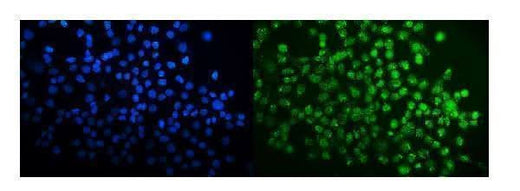
Boster Bio Anti-SPAK/STK39 Antibody Picoband® catalog # A02516-3. Tested in ELISA, Flow Cytometry, IF, ICC, WB applications. This antibody reacts with Human, Mouse, Rat. The brand Picoband indicates this is a premium antibody that guarantees superior quality, high affinity, and strong signals with minimal background in Western blot applications. Only our best-performing antibodies are designated as Picoband, ensuring unmatched performance.
STE20/SPS1-related proline-alanine-rich protein kinase is an enzyme that in humans is encoded by the STK39 gene. This gene encodes a serine/threonine kinase that is thought to function in the cellular stress response pathway. The kinase is activated in response to hypotonic stress, leading to phosphorylation of several cation-chloride-coupled cotransporters. The catalytically active kinase specifically activates the p38 MAP kinase pathway, and its interaction with p38 decreases upon cellular stress, suggesting that this kinase may serve as an intermediate in the response to cellular stress.
Product information
| Supplier | Boster Bio |
|---|---|
| ABMIUM evidence status | ABMIUM Verified™ collaborator-tested data |
| Catalogue reference | A02516-3 |
| Product category | Primary Antibodies |
| Reactive species | Human, Mouse, Rat |
| Tested applications | ELISA, Flow Cytometry, IF/ICC, IHC, IHC-P, WB |
| Available conjugations | Unconjugated, Biotin, Cy3, Fluoro488, Fluoro550, Fluoro594, FITC, HRP, APC, PE, Fluoro647 |
| Gene name | STK39 |
| Protein name | STE20/SPS1-related proline-alanine-rich protein kinase |
| Immunogen | E.coli-derived human SPAK/STK39 recombinant protein (Position: Q338-S545). |
| Host | Rabbit |
| Clonality | Polyclonal |
| Isotype | Rabbit IgG |
| Purification | Immunogen affinity purified. |
| Storage | Store at -20℃ for one year from date of receipt. After reconstitution, at 4℃ for one month. It can also be aliquotted and stored frozen at -20℃ for six months. Avoid repeated freeze-thaw cycles. |
| UniProt | Q9UEW8 |
| NCBI Gene ID | 27347 |
Available variants
| Conjugation | Size |
|---|---|
| Unconjugated | 100 μg/vial |
| Biotin | 100 μg/vial |
| Cy3 | 100 μg/vial |
| Fluoro488 | 100 μg/vial |
| Fluoro550 | 100 μg/vial |
| Fluoro594 | 100 μg/vial |
| FITC | 100 μg/vial |
| HRP | 100 μg/vial |
| APC | 100 μg/vial |
| PE | 100 μg/vial |
| Fluoro647 | 100 μg/vial |
Key Facts
Product type
Primary Antibody›
Target: STE20/SPS1-related proline-alanine-rich protein kinase
| Target | STE20/SPS1-related proline-alanine-rich protein kinase |
| Also known as | serine/threonine kinase 39; DCHT; PASK; SPAK; STK39 |
| Concentration | Adding 0.2 ml of distilled water will yield a concentration of 500 μg/ml. |
| Species reactivity | Human,Mouse,Rat |
| Observed band | 65-70 kDa |
| Form / buffer | Lyophilized |
| Shelf life | Store at -20℃ for one year from date of receipt. After reconstitution, at 4℃ for one month. It can also be aliquotted and stored frozen at -20℃ for six months. Avoid repeated freeze-thaw cycles. |
| Host species | Rabbit |
| Clonality | Polyclonal |
| Isotype | Rabbit IgG |
| Conjugation | Unconjugated|Biotin|Cy3|Fluoro488|Fluoro550|Fluoro594|FITC|HRP|APC|PE|Fluoro647 |
| Non-cross-reactive with | No cross-reactivity with other proteins. |
| Tested applications |
ELISAFlow CytometryIF/ICCIHCIHC-PWB |
| Dilution range | Western blot, 0.25-0.5μg/ml, Human, Mouse, Rat Immunocytochemistry/Immunofluorescence, 5μg/ml, Human Flow Cytometry (Fixed), 1-3μg/1x106 cells, Human ELISA, 0.1-0.5μg/ml, - |
| Immunogen | E.coli-derived human SPAK/STK39 recombinant protein (Position: Q338-S545). |
| Purification | Immunogen affinity purified. |
Why researchers trust ABMIUM
2,000+
Researchers trust us
50,000+
Citations
ISO 9001
Certified Collaborators
Reactivity & Application Validation
3 speciess| Species | WB | IHC | IHC-P | IHC-F | IF/ICC | FLOW CYTOMETRY | ELISA | IP |
|---|---|---|---|---|---|---|---|---|
| Human | ||||||||
| Mouse | ||||||||
| Rat |
Specifications
Target
STE20/SPS1-related proline-alanine-rich protein kinase
Also known as
serine/threonine kinase 39; DCHT; PASK; SPAK; STK39
Concentration
Adding 0.2 ml of distilled water will yield a concentration of 500 μg/ml.
Form / buffer
Lyophilized
Host species
Rabbit
Clonality
Polyclonal
Isotype
Rabbit IgG
Conjugation
Unconjugated|Biotin|Cy3|Fluoro488|Fluoro550|Fluoro594|FITC|HRP|APC|PE|Fluoro647
Species reactivity
Human,Mouse,Rat
Tested applications
ELISAFlow CytometryIF/ICCIHCIHC-PWB
Immunogen
E.coli-derived human SPAK/STK39 recombinant protein (Position: Q338-S545).
Observed band
65-70 kDa
Dilution range
Western blot, 0.25-0.5μg/ml, Human, Mouse, Rat
Immunocytochemistry/Immunofluorescence, 5μg/ml, Human
Flow Cytometry (Fixed), 1-3μg/1x106 cells, Human
ELISA, 0.1-0.5μg/ml, -
Immunocytochemistry/Immunofluorescence, 5μg/ml, Human
Flow Cytometry (Fixed), 1-3μg/1x106 cells, Human
ELISA, 0.1-0.5μg/ml, -
Purification
Immunogen affinity purified.
Storage & Stability
Add 0.2ml of distilled water will yield a concentration of 500μg/ml.
Shipped at
Ambient or cold-chain dependent on product format
Short-term storage
Store at -20℃ for one year from date of receipt. After reconstitution, at 4℃ for one month. It can also be aliquotted and stored frozen at -20℃ for six months. Avoid repeated freeze-thaw cycles.
Long-term storage
Store at -20℃ for one year from date of receipt. After reconstitution, at 4℃ for one month. It can also be aliquotted and stored frozen at -20℃ for six months. Avoid repeated freeze-thaw cycles.
Storage conditions
Store at -20℃ for one year from date of receipt. After reconstitution, at 4℃ for one month. It can also be aliquotted and stored frozen at -20℃ for six months. Avoid repeated freeze-thaw cycles.
Storage buffer
Each vial contains 4mg Trehalose, 0.9mg NaCl, 0.2mg Na2HPO4, 0.005mg NaN3.
Shelf life
Store at -20℃ for one year from date of receipt. After reconstitution, at 4℃ for one month. It can also be aliquotted and stored frozen at -20℃ for six months. Avoid repeated freeze-thaw cycles.
Compliance & Certifications
RUO
For Research Use Only
Not intended for diagnostic or therapeutic use.
Customer Reviews
Recently Viewed