
Primary Antibody supplied by Boster Bio Read more ›

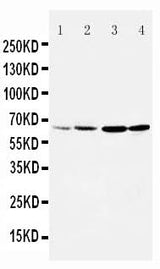
Anti-Dopamine Receptor D1/DRD1 Antibody Picoband® is a research-use antibody from Boster Bio for studying D in ELISA, Flow Cytometry, IHC, IHC-P, WB workflows with listed reactivity for Human, Mouse, Rat. Specifications and supporting documents below should be reviewed when planning the experiment.
Boster Bio Anti-Dopamine Receptor D1/DRD1 Antibody catalog # PA1571. Tested in IHC, WB applications. This antibody reacts with Human, Mouse, Rat. The brand Picoband indicates this is a premium antibody that guarantees superior quality, high affinity, and strong signals with minimal background in Western blot applications. Only our best-performing antibodies are designated as Picoband, ensuring unmatched performance.Dopamine receptor D1, also known as DRD1, is a human gene. It is the most highly expressed DA receptor subtype among the DA receptor family. Receptors for dopamine have been classified into two functional types, D1 and D2. They belong to the family of receptors acting through G (or guanine nucleotide-binding) proteins. D2 receptors inhibit adenylyl cyclase, but D1 receptors stimulate adenylyl cyclase and activate cyclic AMP-dependent protein kinases. Dopamine D1 and D2 receptors are targets of drug therapy in many psychomotor disorders, including Parkinson's disease and schizophrenia, and may also have a role in drug addiction and alcoholism. D1 receptors regulate neuron growth and differentiation, influence behaviour and modify dopamine D2 receptor-mediated events. And the presence of a D1 receptor gene restriction fragment length polymorphism will be helpful for future disease linkage studies. DRD1 also regulates the neurochemical architecture of the striatum and is critical for the normal expression of motor activity.
| Supplier | Boster Bio |
|---|---|
| ABMIUM evidence status | ABMIUM Verified™ collaborator-tested data |
| Catalogue reference | PA1571 |
| Product category | Primary Antibodies |
| Reactive species | Human, Mouse, Rat |
| Tested applications | ELISA, Flow Cytometry, IHC, IHC-P, WB |
| Available conjugations | Unconjugated, Biotin, Cy3, Fluoro488, Fluoro550, Fluoro594, FITC, HRP, APC, PE, Fluoro647 |
| Gene name | DRD1 |
| Protein name | D |
| Specificity | No cross reactivity with other proteins. |
| Immunogen | A synthetic peptide corresponding to a sequence in the middle region of human DRD1, different from the related rat and mouse sequences by one amino acid. |
| Host | Rabbit |
| Clonality | Polyclonal |
| Isotype | Rabbit IgG |
| Purification | Immunogen affinity purified. |
| Storage | Store at -20℃ for one year from date of receipt. After reconstitution, at 4℃ for one month. It can also be aliquotted and stored frozen at -20℃ for six months. Avoid repeated freeze-thaw cycles. |
| UniProt | P21728 |
| NCBI Gene ID | 1812 |
| Conjugation | Size |
|---|---|
| Unconjugated | 100 μg/vial |
| Biotin | 100 μg/vial |
| Cy3 | 100 μg/vial |
| Fluoro488 | 100 μg/vial |
| Fluoro550 | 100 μg/vial |
| Fluoro594 | 100 μg/vial |
| FITC | 100 μg/vial |
| HRP | 100 μg/vial |
| APC | 100 μg/vial |
| PE | 100 μg/vial |
| Fluoro647 | 100 μg/vial |
| Collaborator | Boster Bio |
| Partner model | PA1571 |
| Target | D |
| Reactivity | Human,Mouse,Rat |
| Applications | ELISA,Flow Cytometry,IHC,IHC-P,WB |
| Conjugation | Unconjugated|Biotin|Cy3|Fluoro488|Fluoro550|Fluoro594|FITC|HRP|APC|PE|Fluoro647 |
| Cross-reactivity | No cross-reactivity with other proteins |
| Dilution range | Immunohistochemistry (Paraffin-embedded Section), 0.5-1μg/ml, Human, Rat, Mouse <br>Western blot, 0.1-0.5μg/ml, Human, Rat, Mouse<br> |
| Host | Rabbit |
| Clonality | Polyclonal |
| Isotype | Rabbit IgG |
| Immunogen | A synthetic peptide corresponding to a sequence in the middle region of human DRD1, different from the related rat and mouse sequences by one amino acid. |
| Concentration | Adding 0.2 ml of distilled water will yield a concentration of 500 μg/ml. |
| Purification | Immunogen affinity purified. |
| Purity | No cross reactivity with other proteins. |
| Shelf life | Store at -20℃ for one year from date of receipt. After reconstitution, at 4℃ for one month. It can also be aliquotted and stored frozen at -20℃ for six months. Avoid repeated freeze-thaw cycles. |
| Availability | Available |
| Species | WB | IHC | IHC-P | IHC-F | IF/ICC | Flow Cytometry | ELISA | IP |
|---|---|---|---|---|---|---|---|---|
| Human | ||||||||
| Mouse | ||||||||
| Rat |
Collaborator meets ABMIUM quality standards and overall product performance standards have been met.
For research applications. Not for diagnostic use.
No customer reviews yet.
