
Primary Antibody supplied by Boster Bio Read more ›

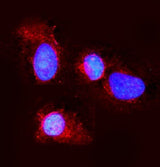
Anti-Claudin 3/CLDN3 Antibody Picoband® is a research-use antibody from Boster Bio for studying Claudin-3 in ELISA, Flow Cytometry, IF/ICC, IHC, IHC-P, WB workflows with listed reactivity for Mouse, Rat. Specifications and supporting documents below should be reviewed when planning the experiment.
Boster Bio Anti-Claudin 3/CLDN3 Antibody Picoband® catalog # A04393-4. Tested in IF, ICC, WB applications. This antibody reacts with Mouse, Rat. The brand Picoband indicates this is a premium antibody that guarantees superior quality, high affinity, and strong signals with minimal background in Western blot applications. Only our best-performing antibodies are designated as Picoband, ensuring unmatched performance.Claudin 3, also known as CLDN3, is a protein which in humans is encoded by the CLDN3 gene. This gene encodes a member of the claudin family. Claudins are integral membrane proteins and components of tight junction strands. Tight junction strands serve as a physical barrier to prevent solutes and water from passing freely through the paracellular space between epithelial or endothelial cell sheets, and also play critical roles in maintaining cell polarity and signal transductions. The protein encoded by this gene is a low-affinity receptor for clostridium perfringens enterotoxin (CPE) produced by the bacterium Clostridium perfringens, and the interaction with CPE results in increased membrane permeability by forming small pores in plasma membrane. This protein is highly overexpressed in uterine carcinosarcoma. This protein is also predominantly present in brain endothelial cells, where it plays a specific role in the establishment and maintenance of blood brain barrier tight junction morphology.
| Collaborator | Boster Bio |
| Partner model | A04393-4 |
| Target | Claudin-3 |
| Reactivity | Mouse,Rat |
| Applications | ELISA,Flow Cytometry,IF/ICC,IHC,IHC-P,WB |
| Conjugation | Unconjugated|Biotin|Cy3|Fluoro488|Fluoro550|Fluoro594|FITC|HRP|APC|PE|Fluoro647 |
| Cross-reactivity | No cross-reactivity with other proteins. |
| Dilution range | Western blot, 0.25-0.5μg/ml, Rat<br> Immunocytochemistry/Immunofluorescence, 5μg/ml, Mouse<br> |
| Host | Rabbit |
| Clonality | Polyclonal |
| Isotype | Rabbit IgG |
| Immunogen | A synthetic peptide corresponding to a sequence at the C-terminus of mouse Claudin 3/CLDN3, which shares 73.3% and 94.1% amino acid (aa) sequence identity with human and rat Claudin 3/CLDN3, respectively. |
| Concentration | Adding 0.2 ml of distilled water will yield a concentration of 500 μg/ml. |
| Purification | Immunogen affinity purified. |
| Shelf life | Store at -20℃ for one year from date of receipt. After reconstitution, at 4℃ for one month. It can also be aliquotted and stored frozen at -20℃ for six months. Avoid repeated freeze-thaw cycles. |
| Availability | Available |
| Species | WB | IHC | IHC-P | IHC-F | IF/ICC | Flow Cytometry | ELISA | IP |
|---|---|---|---|---|---|---|---|---|
| Mouse | ||||||||
| Rat |
Collaborator meets ABMIUM quality standards and overall product performance standards have been met.
For research applications. Not for diagnostic use.
No customer reviews yet.
