
Primary Antibody supplied by Boster Bio Read more ›

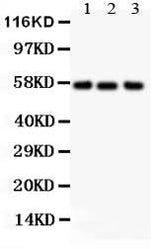
Anti-Alkaline Phosphatase/ALPL Antibody Picoband® is a research-use antibody from Boster Bio for studying Alkaline phosphatase, tissue-nonspecific isozyme in ELISA, Flow Cytometry, IHC, IHC-P, WB workflows with listed reactivity for Human. Specifications and supporting documents below should be reviewed when planning the experiment.
Boster Bio Anti-Alkaline Phosphatase/ALPL Antibody catalog # PA1004-2. Tested in WB applications. This antibody reacts with Human. The brand Picoband indicates this is a premium antibody that guarantees superior quality, high affinity, and strong signals with minimal background in Western blot applications. Only our best-performing antibodies are designated as Picoband, ensuring unmatched performance.Alkaline phosphatase (ALPL) removes phosphate groups from the 5' end of DNA and RNA, and from proteins, at high pH. Most mammals have 4 different isozymes: placental, placental like, intestinal and non tissue specific (found in liver, kidney and bone). Tissues with particularly high concentrations of ALP include the liver, bile ducts, placenta, and bone. ALPL is the alkaline phosphatase of skin fibroblasts,the tissue-nonspecific type, and that it is active toward millimolar concentrations of the putative natural substrates phosphoethanolamine (PEA) and pyridoxal-5-prime-phosphate (PLP). ALPL gene exists in single copy in the haploid genome and is composed of 12 exons distributed over more than 50 kb.Damaged or diseased tissue releases enzymes into the blood, so serum ALP measurements can be abnormal in many conditions, including bone disease and liver disease.
| Collaborator | Boster Bio |
| Partner model | PA1004-2 |
| Target | Alkaline phosphatase, tissue-nonspecific isozyme |
| Reactivity | Human |
| Applications | ELISA,Flow Cytometry,IHC,IHC-P,WB |
| Conjugation | Unconjugated|Biotin|Cy3|Fluoro488|Fluoro550|Fluoro594|FITC|HRP|APC|PE|Fluoro647 |
| Cross-reactivity | No cross-reactivity with other proteins. |
| Dilution range | Western blot, 0.1-0.5μg/ml, Human<br> |
| Host | Rabbit |
| Clonality | Polyclonal |
| Isotype | Rabbit IgG |
| Immunogen | A synthetic peptide corresponding to a sequence at the N-terminus of human Alkaline Phosphatase, different from the related mouse and rat sequences by three amino acids. |
| Concentration | Adding 0.2 ml of distilled water will yield a concentration of 500 μg/ml. |
| Purification | Immunogen affinity purified. |
| Purity | No cross reactivity with other proteins. |
| Shelf life | Store at -20℃ for one year from date of receipt. After reconstitution, at 4℃ for one month. It can also be aliquotted and stored frozen at -20℃ for six months. Avoid repeated freeze-thaw cycles. |
| Availability | Available |
| Species | WB | IHC | IHC-P | IHC-F | IF/ICC | Flow Cytometry | ELISA | IP |
|---|---|---|---|---|---|---|---|---|
| Human |
Collaborator meets ABMIUM quality standards and overall product performance standards have been met.
For research applications. Not for diagnostic use.
No customer reviews yet.
