Collaborator Boster Bio
Primary AntibodiesABMIUM Verified™Collaborator Tested
ABM-27132

Anti-Alkaline Phosphatase/ALPL Antibody Picoband®

ABMIUM Verified™|Collaborator Tested|Boster Bio

Primary Antibody supplied by Boster Bio Read more ›

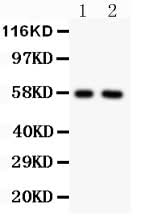
Anti-Alkaline Phosphatase/ALPL Antibody Picoband® Boster Bio
Zoom
Anti-Alkaline Phosphatase/ALPL Antibody Picoband® Boster Bio

Product Description

Anti-Alkaline Phosphatase/ALPL Antibody Picoband® is a research-use antibody from Boster Bio for studying Alkaline phosphatase, tissue-nonspecific isozyme in ELISA, Flow Cytometry, IHC, IHC-P, WB workflows with listed reactivity for Mouse, Rat. Specifications and supporting documents below should be reviewed when planning the experiment.

Boster Bio Anti-Alkaline Phosphatase/ALPL Antibody catalog # PA1004-1. Tested in WB applications. This antibody reacts with Mouse, Rat. The brand Picoband indicates this is a premium antibody that guarantees superior quality, high affinity, and strong signals with minimal background in Western blot applications. Only our best-performing antibodies are designated as Picoband, ensuring unmatched performance.

Alkaline phosphatase, tissue-nonspecific isozyme is an enzyme that in humans is encoded by the ALPL gene. There are at least four distinct but related alkaline phosphatases: intestinal, placental, placental-like, and liver/bone/kidney (tissue non-specific). The first three are located together on chromosome 2 while the tissue non-specific form is located on chromosome 1. Liver/bone/kidney alkaline phosphatase, also known as tissue-nonspecific alkaline phosphatase, acts physiologically as a lipid-anchored phosphoethanolamine (PEA) and pyridoxal-5-prime-phosphate (PLP) ectophosphatase Mice that lack a functional form of this enzyme show normal skeletal development. This enzyme has been linked ly to a disorder known as hypophosphatasia, a disorder that is characterized by hypercalcemia and includes skeletal defects.

Product information

Key Facts

Product typePrimary Antibodies Target: Alkaline phosphatase, tissue-nonspecific isozyme
Collaborator Boster Bio
Partner model PA1004-1
Target Alkaline phosphatase, tissue-nonspecific isozyme
Reactivity Mouse,Rat
Applications ELISA,Flow Cytometry,IHC,IHC-P,WB
ConjugationUnconjugated|Biotin|Cy3|Fluoro488|Fluoro550|Fluoro594|FITC|HRP|APC|PE|Fluoro647
Cross-reactivityNo cross-reactivity with other proteins.
Dilution rangeWestern blot, 0.1-0.5μg/ml, Rat, Mouse<br>
Host Rabbit
Clonality Polyclonal
Isotype Rabbit IgG
Immunogen A synthetic peptide corresponding to a sequence at the N-terminus of rat Alkaline Phosphatase, different from the related mouse sequence by one amino acid.
Concentration Adding 0.2 ml of distilled water will yield a concentration of 500 μg/ml.
Purification Immunogen affinity purified.
Purity No cross reactivity with other proteins.
Shelf life Store at -20℃ for one year from date of receipt. After reconstitution, at 4℃ for one month. It can also be aliquotted and stored frozen at -20℃ for six months. Avoid repeated freeze-thaw cycles.
AvailabilityAvailable
Why ABMIUM?
2,000+ Researchers trust us
50,000+ Citations
ISO 9001 Certified Collaborators
Independently handpicked Products selected for quality and fit

Application Validation Matrix

2 speciess
ABMIUM Validated™ ABMIUM Verified™ Expected Performance Not suitable
SpeciesWBIHCIHC-PIHC-FIF/ICCFlow CytometryELISAIP
Mouse
Rat

Specifications

Target
Alkaline phosphatase, tissue-nonspecific isozyme
Also known as
Akp2 antibody; Alkaline phosphatase intestinal antibody; Alkaline phosphatase intestinal precursor antibody; Alkaline phosphatase liver/bone/kidney antibody; Alkaline phosphatase placental antibody; Alkaline phosphatase placental like 2 antibody; Alkaline phosphatase placental like antibody; Alkaline phosphatase placental type antibody; Alkaline phosphomonoesterase antibody; ALP 1 antibody; ALP antibody; ALP I antibody; ALP L antibody; ALP P antibody; ALPG antibody; ALPI antibody; ALPL antibody; ALPP antibody; ALPPL antibody; ALPPL2 antibody; AP TNAP antibody; FLJ40094 antibody; GCAP antibody; Germ cell alkaline phosphatase antibody; Glycerophosphatase antibody; HOPS antibody; IAP antibody; Intestinal alkaline phosphatase antibody; Kasahara isozyme antibody; Nagao isozyme antibody; OTTHUMP00000164357 antibody; Placental alkaline phosphatase antibody; Placental like alkaline phosphatase antibody; PLAP 1 antibody; PLAP antibody; PLAP like antibody; Regan isozyme antibody; Testicular and thymus alkaline phosphatase antibody; Tissue non specific alkaline phosphatase antibody; Tissue nonspecific ALP antibody; TNAP antibody; TNSALP antibody
Concentration
Adding 0.2 ml of distilled water will yield a concentration of 500 μg/ml.
Purity
No cross reactivity with other proteins.
Form / buffer
Lyophilized
Host species
Rabbit
Clonality
Polyclonal
Isotype
Rabbit IgG
Conjugation
Unconjugated|Biotin|Cy3|Fluoro488|Fluoro550|Fluoro594|FITC|HRP|APC|PE|Fluoro647
Species reactivity
Mouse,Rat
Tested applications
ELISAFlow CytometryIHCIHC-PWB
Immunogen
A synthetic peptide corresponding to a sequence at the N-terminus of rat Alkaline Phosphatase, different from the related mouse sequence by one amino acid.
Observed band
57 kDa
Dilution range
Western blot, 0.1-0.5μg/ml, Rat, Mouse
Purification
Immunogen affinity purified.

Storage & Stability

Add 0.2ml of distilled water will yield a concentration of 500ug/ml.
Shipped at
Ambient or cold-chain dependent on product format
Short-term storage
Store at -20℃ for one year from date of receipt. After reconstitution, at 4℃ for one month. It can also be aliquotted and stored frozen at -20℃ for six months. Avoid repeated freeze-thaw cycles.
Storage buffer
Each vial contains antibody formulated with stabilizing components, 0.9mg NaCl, 0.2mg Na2HPO4, 0.05mg Thimerosal, 0.05mg NaN3.
*This antibody is supplied in a stabilized formulation. Compatibility with conjugation reactions depends on the chemistry of the conjugation method used. For conjugation methods that are not compatible with the stabilizing components present in this formulation, a carrier-free antibody format is required.
Shelf life
Store at -20℃ for one year from date of receipt. After reconstitution, at 4℃ for one month. It can also be aliquotted and stored frozen at -20℃ for six months. Avoid repeated freeze-thaw cycles.

Compliance & Certifications

ABMIUM
ABMIUM Verified

Collaborator meets ABMIUM quality standards and overall product performance standards have been met.

RUO
Research Use Only

For research applications. Not for diagnostic use.

Customer Reviews

No customer reviews yet.