
Primary Antibody supplied by Boster Bio Read more ›

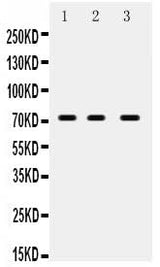
Anti-ABCG5 Antibody Picoband® is a research-use antibody from Boster Bio for studying ATP-binding cassette sub-family G member 5 in ELISA, Flow Cytometry, IHC, IHC-P, WB workflows with listed reactivity for Human. Specifications and supporting documents below should be reviewed when planning the experiment.
Boster Bio Anti-ABCG5 Antibody Picoband® catalog # PB9415. Tested in WB applications. This antibody reacts with Human. The brand Picoband indicates this is a premium antibody that guarantees superior quality, high affinity, and strong signals with minimal background in Western blot applications. Only our best-performing antibodies are designated as Picoband, ensuring unmatched performance.ABCG5 (Atp-binding cassette, subfamily g, member 5) also known as STEROLIN 1, is a protein that in humans is encoded by the ABCG5 gene. The protein encoded by this gene is a member of the superfamily of ATP-binding cassette (ABC) transporters. This protein is a member of the White subfamily. The protein encoded by this gene functions as a half-transporter to limit intestinal absorption and promote biliary excretion of sterols. The ABCG5 gene contains 13 exons and spans about 28 kb. The ABCG5 gene is mapped on 2p21. It is expressed in a tissue-specific manner in the liver, colon, and intestine. This gene is tandemly arrayed on chromosome 2, in a head-to-head orientation with family member ABCG8. Mutations in this gene may contribute to sterol accumulation and atheroschlerosis, and have been observed in patients with sitosterolemia. Small (2003) reviewed the role of ABC transporters in secretion of cholesterol from liver into bile, particularly the role of ABCG5/ABCG8. The ABCG5 and ABCG8 genes are an example of closely neighboring genes in a head-to-head orientation that, when mutated, cause the same phenotype.
| Collaborator | Boster Bio |
| Partner model | PB9415 |
| Target | ATP-binding cassette sub-family G member 5 |
| Reactivity | Human |
| Applications | ELISA,Flow Cytometry,IHC,IHC-P,WB |
| Conjugation | Unconjugated|Biotin|Cy3|Fluoro488|Fluoro550|Fluoro594|FITC|HRP|APC|PE|Fluoro647 |
| Cross-reactivity | No cross-reactivity with other proteins |
| Dilution range | Western blot, 0.1-0.5μg/ml, Human <br> |
| Host | Rabbit |
| Clonality | Polyclonal |
| Isotype | Rabbit IgG |
| Immunogen | A synthetic peptide corresponding to a sequence at the N-terminus of human ABCG5, different from the related mouse and rat sequences by two amino acids. |
| Concentration | Adding 0.2 ml of distilled water will yield a concentration of 500 μg/ml. |
| Purification | Immunogen affinity purified. |
| Purity | No cross reactivity with other proteins. |
| Shelf life | Store at -20℃ for one year from date of receipt. After reconstitution, at 4℃ for one month. It can also be aliquotted and stored frozen at -20℃ for six months. Avoid repeated freeze-thaw cycles. |
| Availability | Available |
| Species | WB | IHC | IHC-P | IHC-F | IF/ICC | Flow Cytometry | ELISA | IP |
|---|---|---|---|---|---|---|---|---|
| Human |
Collaborator meets ABMIUM quality standards and overall product performance standards have been met.
For research applications. Not for diagnostic use.
No customer reviews yet.
