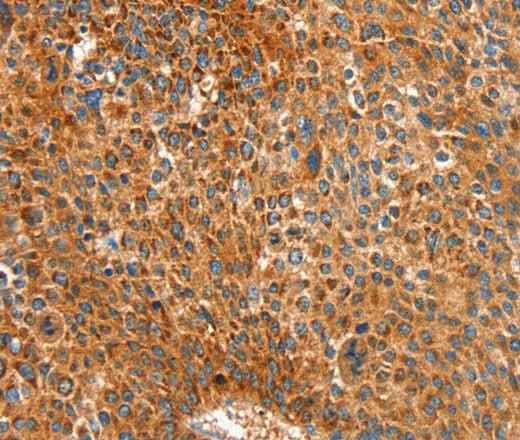
Anti-Human/Mouse/Rat ALDH1A2 Antibody with collaborator-tested evidence for IHC.
Know who made it. See the evidence. Buy through one marketplace.
Anti-Human/Mouse/Rat ALDH1A2 Antibody is a research-use antibody from Elabscience for studying ALDH1A2 in IHC workflows with listed reactivity for Human, Mouse, Rat. Specifications and supporting documents below should be reviewed when planning the experiment.
Fully tested in-house by ABMIUM. Highest confidence. Non-conformities fully supported under the ABMIUM Product Promise.
Quality verified. Independent collaborator or expected-performance data available. Product meets ABMIUM quality standards.
Expected to work based on structural and biochemical data. Not yet directly tested by ABMIUM or a collaborator. No non-conformity support for this combination.
Not recommended for this application or species/sample combination. This may indicate either evidence of unsuitability or that the combination has not been tested and therefore cannot currently be recommended.
Evidence status by application and model.
| Species | WB | IHC-P | IHC-Fr | IF/ICC | Flow Cyt | IP | ChIP | IHC |
|---|---|---|---|---|---|---|---|---|
| Human | ||||||||
| Mouse | ||||||||
| Rat |
This product is manufactured by Elabscience and sold through ABMIUM without relabelling.
ABMIUM supports global orders. Availability, shipping requirements and applicable import arrangements are confirmed before fulfilment where required.
Yes. Send your target, sample, application and experimental conditions through ABMIUM MATCH or technical support.
Unless the listing expressly states otherwise, ABMIUM products are supplied for research use only and are not for diagnostic or therapeutic use.
ALDH1A2 (aldehyde dehydrogenase 1 family member A2), commonly called retinal dehydrogenase 2 or RALDH2, is a retinaldehyde dehydrogenase that generates retinoic acid, a vitamin A-derived signalling molecule. Researchers study ALDH1A2 to examine spatial control of retinoid signalling, developmental patterning and tissue-specific retinoic acid metabolism.
Biological function: ALDH1A2 catalyses NAD-dependent oxidation of retinaldehyde to retinoic acid, providing a key biosynthetic step that controls local retinoic acid availability. Retinal dehydrogenase 2 therefore contributes to retinoid-dependent transcriptional programmes in developing and adult tissues.