
Rat REG3A ELISA Kit PicoKine®
ELISA Kit supplied by Boster Bio Read more ›

Product Description
Regenerating islet-derived protein 3 alpha for merly known as HIP/PAP (Hepatocarcinoma-Intestine-Pancreas/Pancreatitis-Associated Protein) and peptide 23 is a protein that in humans is encoded by the REG3A gene. This gene is mapped to 4q33. PAP is a secretory protein not normally expressed in healthy pancreas but highly induced during acute pancreatitis. While PAP has been shown to be anti-bacterial and antiapoptotic in vitro, its definitive biological function in vivo is not clear. Using antisepse oligonucleotides, inhibition of PAP expression significantly worsened pancreatitis in a rat model. During pancreatitis, PAP released by the pancreas could mediate lung inflammation through induction of hepatic TNF- alpha expression and subsequent increase in circulating TNFalpha. PAP is activated in primary liver cancers. In normal liver, the protein is undetectable in normal mature hepatocytes and found only in some ductular cells, representing potential hepatic progenitor cells. PAP can be considered hepatic cytokine that combines mitogenic and anti-apoptotic functions regarding hepatocytes, and consequently acts as a growth factor in vivo to enhance liver regeneration. In pancreatic cancor, PAP was overexpressed in 79% (30 of 38) of pancreatic ductal adenocarcinoma, 19% (7 of 36) of chronic pancreatitis, and 29% (2 of 7) of mucinous cystadenoma. PAP was found in malignant ductular structures in pancreatic carcinomas as well as in benign proliferating ductules and acinar cells in chronic pancreatitis. Elevation of PAP in patients with pancreatic cancer is not merely explainable by concomitant pancreatitis, but seems to be due to increased PAP production by the cancer cells and is also correlated to tumour load as expressed by the UICC stages. Epithelial expression of PAP was induced under intestinal mucosal inflammation initiated by exposure to commensal bacteria or DSS as well as inflamed IBD colon. Increased serum level of PAP diagnosed ileal location in active Crohn disease with a sensitivity of 60%, a specificity of 94%, a positive predictive value of 84% and a negative predictive value of 81%. Elevated serum PAP (> 50 ng/mL) is significantly associated with disease activity and ileal location of Crohn disease.
Product information
| Supplier | Boster Bio |
|---|---|
| ABMIUM evidence status | ABMIUM Verified™ collaborator-tested data |
| Catalogue reference | EK1836 |
| Product category | PicoKine® ELISA Kits |
| Reactive species | Rat |
| Tested applications | ELISA |
| Gene name | Reg3a |
| Protein name | Regenerating islet-derived protein 3-alpha |
| Sample type | cell culture supernatants, serum and plasma (heparin, EDTA, citrate ). |
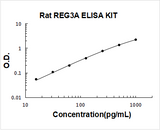
| Assay range | 15.6 pg/ml - 1,000 pg/ml |
| Sensitivity | <10 pg/ml |
| Specificity | Natural and recombinant rat REG3A |
| Immunogen | Expression system for standard: NS0; Immunogen sequence: E26-Q174 |
| Storage | Store at 4℃ for 6 months, at -20℃ for 12 months. Avoid multiple freeze-thaw cycles (Ships with gel ice, can store for up to 3 days in room temperature. Freeze upon receiving.) |
| UniProt | P35231 |
| NCBI Gene ID | 171162 |
Available variants
| Conjugation | Size |
|---|---|
| Not applicable | 96 wells/kit, with removable strips. |
Key Facts
| Target | Regenerating islet-derived protein 3-alpha |
| Also known as | regenerating family member 3 alpha; HIP; HIP/PAP; INGAP; PAP; PAP-H; PAP1; PBCGF; REG-III; REG3; Reg3a |
| Species reactivity | Rat |
| Purity | Natural and recombinant rat REG3A |
| Shelf life | Store at 4℃ for 6 months, at -20℃ for 12 months. Avoid multiple freeze-thaw cycles (Ships with gel ice, can store for up to 3 days in room temperature. Freeze upon receiving.) |
| Sensitivity | <10 pg/ml |
| Detection range | 15.6 pg/ml - 1,000 pg/ml |
| Sample types |
cell culture supernatantsserum and plasma (heparinEDTAcitrate ).
See sample validation ›
|
Sample Type Validation
4 sample types| Sample Type | SERUM | PLASMA (EDTA) | URINE | CSF | CELL SUPERNATANT |
|---|---|---|---|---|---|
| cell culture supernatants | |||||
| serum and plasma (heparin | |||||
| EDTA | |||||
| citrate ). |
Specifications
Storage & Stability
Compliance & Certifications
Not intended for diagnostic or therapeutic use.