
Anti-Adiponectin/ADIPOQ Antibody Picoband®
Primary Antibody supplied by Boster Bio Read more ›

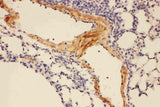
Product Description
Adiponectin, also known as APM1 or ACDC, is a protein which in humans is encoded by the ADIPOQ gene. It is mapped to chromosome 16 in a region showing homology of synteny with human 3q27. By RNase protection and Western blot analysis, it has been showed that Adiponectin is expressed by differentiated adipocytes as a 33-kD protein that is also detectable in serum. By sequence comparisons, it has been found that links between APM1 and TNF family ligands as well as to cytokines expressed by T cells. Adiponectin is a protein hormone that modulates a number of metabolic processes, including glucose regulation and fatty acid oxidation. This gene is exclusively secreted from adipose tissue (and also from the placenta in pregnancy) into the bloodstream and is very abundant in plasma relative to many hormones.
Product information
| Supplier | Boster Bio |
|---|---|
| ABMIUM evidence status | ABMIUM Verified™ collaborator-tested data |
| Catalogue reference | PB9011 |
| Product category | Primary Antibodies |
| Reactive species | Mouse, Rat |
| Tested applications | ELISA, Flow Cytometry, IHC, IHC-P, WB |
| Available conjugations | Unconjugated, Biotin, Cy3, Fluoro488, Fluoro550, Fluoro594, FITC, HRP, APC, PE, Fluoro647 |
| Gene name | ADIPOQ |
| Protein name | 30 kDa adipocyte complement-related protein |
| Specificity | No cross reactivity with other proteins. |
| Immunogen | E.coli-derived rat Adiponectin recombinant protein (Position: I19-N244). Rat Adiponectin shares 90% amino acid (aa) sequence identity with mouse Adiponectin. |
| Host | Rabbit |
| Clonality | Polyclonal |
| Isotype | Rabbit IgG |
| Purification | Immunogen affinity purified. |
| Storage | Store at -20℃ for one year from date of receipt. After reconstitution, at 4℃ for one month. It can also be aliquotted and stored frozen at -20℃ for six months. Avoid repeated freeze-thaw cycles. |
| UniProt | Q8K3R4 |
| NCBI Gene ID | 246253 |
Available variants
| Conjugation | Size |
|---|---|
| Unconjugated | 100 μg/vial |
| Biotin | 100 μg/vial |
| Cy3 | 100 μg/vial |
| Fluoro488 | 100 μg/vial |
| Fluoro550 | 100 μg/vial |
| Fluoro594 | 100 μg/vial |
| FITC | 100 μg/vial |
| HRP | 100 μg/vial |
| APC | 100 μg/vial |
| PE | 100 μg/vial |
| Fluoro647 | 100 μg/vial |
Key Facts
| Target | 30 kDa adipocyte complement-related protein |
| Also known as | ACDC; ACRP30; adiponectin; ADIPOQ; ADIPQTL1; ADPN; APM 1; APM1; GBP28; Gelatin binding protein |
| Concentration | Adding 0.2 ml of distilled water will yield a concentration of 500 μg/ml. |
| Species reactivity | Mouse,Rat |
| Observed band | 26 kDa |
| Purity | No cross reactivity with other proteins. |
| Form / buffer | Lyophilized |
| Shelf life | Store at -20℃ for one year from date of receipt. After reconstitution, at 4℃ for one month. It can also be aliquotted and stored frozen at -20℃ for six months. Avoid repeated freeze-thaw cycles. |
| Host species | Rabbit |
| Clonality | Polyclonal |
| Isotype | Rabbit IgG |
| Conjugation | Unconjugated|Biotin|Cy3|Fluoro488|Fluoro550|Fluoro594|FITC|HRP|APC|PE|Fluoro647 |
| Non-cross-reactive with | No cross-reactivity with other proteins |
| Tested applications |
ELISAFlow CytometryIHCIHC-PWB |
| Dilution range | Immunohistochemistry (Paraffin-embedded Section), 0.5-1μg/ml, Mouse, Rat Western blot, 0.1-0.5μg/ml, Rat |
| Immunogen | E.coli-derived rat Adiponectin recombinant protein (Position: I19-N244). Rat Adiponectin shares 90% amino acid (aa) sequence identity with mouse Adiponectin. |
| Purification | Immunogen affinity purified. |
Reactivity & Application Validation
2 speciess| Species | WB | IHC | IHC-P | IHC-F | IF/ICC | FLOW CYTOMETRY | ELISA | IP |
|---|---|---|---|---|---|---|---|---|
| Mouse | ||||||||
| Rat |
Specifications
Western blot, 0.1-0.5μg/ml, Rat
Storage & Stability
*This antibody is supplied in a stabilized formulation.
Compatibility with conjugation reactions depends on the chemistry of the conjugation method used.
For conjugation methods that are not compatible with the stabilizing components present in this formulation, a carrier-free antibody format is required.
Compliance & Certifications
Not intended for diagnostic or therapeutic use.