Manufactured by:Elabscience
Save 20%ABMIUM Verified™RUO

Human ALCAM (Activated Leukocyte Cell Adhesion Molecule) CLIA Kit

Human ALCAM (Activated Leukocyte Cell Adhesion Molecule) CLIA Kit with collaborator-tested sample matrix evidence from Elabscience.

SKU:
ABM10900-1
Product type
Assay Kits
TargetALCAM

Manufacturer provenance

Manufactured by:
Elabscience
Sold by:
ABMIUM
Fulfilled from:
Manufacturer facility or confirmed fulfilment location

Know who made it. See the evidence. Buy through one marketplace.

Product description

Human ALCAM (Activated Leukocyte Cell Adhesion Molecule) CLIA Kit from Elabscience is intended for research workflows involving ALCAM. Review the listed specifications and supporting documents to confirm compatibility with the intended method.

Key facts & specifications
Research areas
Cancer, Immunology, Tags and Cell Markers
Also known as
ALCAM
Cross-reactivity
This kit recognizes Human ALCAM in samples.No significant cross-reactivity or interference between Human ALCAM and analogues was observed
Incubation temperature
2-8℃/-20℃
Assay type
CLIA Kits
Detection method
Chemiluminescence
Plate format
48-well microplate plates pre-coated with anti-ALCAM capture antibody
Technical note
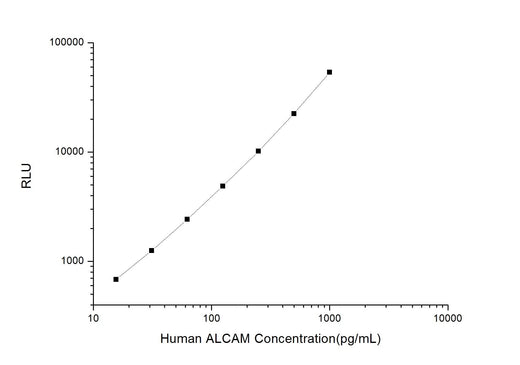
This CLIA kit uses the Sandwich-CLIA principle. The micro CLIA plate provided in this kit has been pre-coated with an antibody specific to Human ALCAM. Samples or Standards are added to the micro CLIA plate wells and combined with the specific antibody. Then a biotinylated detection antibody specific for Human ALCAM and Avidin-Horseradish Peroxidase (HRP) conjugate are added successively to each micro plate well and incubated. Free components are washed away. The substrate solution is added to each well. Only those wells that contain Human ALCAM, biotinylated detection antibody and Avidin-HRP conjugate will appear luminescence. The Relative light unit (RLU) value is measured by the Chemiluminescence immunoassay analyzer at 425nm. The RLU value is positively associated with the concentration of Human ALCAM. You can calculate the concentration of Human ALCAM in the samples by comparing the RLU value of the samples to the standard curve.
Identifiers & database references
Supplier SKU / catalogue number
E-CL-H0247_48T
Gene symbol
ALCAM
Gene ID
214
UniProt accession
Q13740
Storage, stability & shipping
Shelf life
12 months from shipping dates
Shipped at
Wet ice (2-8 degrees C)
Short-term storage
4 degrees C for up to 6 months; do not freeze pre-coated plate
Long-term storage
4 degrees C for up to 12 months
Aliquoting guidance
Lyophilised standards and detection antibody may be reconstituted and aliquoted; store reconstituted aliquots at -20 degrees C for up to 2 weeks
Compliance & documents
REACH compliant
Yes
ISO certifications
ISO 9001:2015, ISO 14001:2015, ISO 45001:2018
Datasheet
Open datasheet
Product manual
Open manual
Safety data sheet
Open SDS
Frequently asked questions
Who manufactured this product?

This product is manufactured by Elabscience and sold through ABMIUM without relabelling.

Can ABMIUM ship this product internationally?

ABMIUM supports global orders. Availability, shipping requirements and applicable import arrangements are confirmed before fulfilment where required.

Can I check suitability before ordering?

Yes. Send your target, sample, application and experimental conditions through ABMIUM MATCH or technical support.

Is this product for clinical use?

Unless the listing expressly states otherwise, ABMIUM products are supplied for research use only and are not for diagnostic or therapeutic use.

Research target context

ALCAMactivated leukocyte cell adhesion molecule

View target guide

ALCAM identifies activated leukocyte cell adhesion molecule in Homo sapiens (Human). This target record connects NCBI Gene 214, UniProtKB Q13740 and related ABMIUM catalogue products.

Biological function: Activated leukocyte cell adhesion molecule (ALCAM; CD166) is an immunoglobulin-superfamily transmembrane adhesion protein that mediates homophilic adhesion and heterophilic interactions including binding to CD6. It contributes to immune-cell adhesion, migration and tissue organisation.
Organism
Multiple species; representative: Homo sapiens (Human)
NCBI Gene
214
UniProtKB
Q13740
Elabscience
£407.00£325.60