

For most Western blots, three blockers cover nearly every scenario you will face. Use BSA for phospho-specific or other sensitive antibodies, skim milk for routine chemiluminescence work on non-phospho targets, and a protein-free or proprietary blocker when background persists despite correct antibody dilutions. If your target protein sits below 25 kDa, add PVP to the shortlist, since it can help reveal small bands that protein-based blockers sometimes mask.
On buffer systems: choose TBST when you are running phospho-detection or any alkaline phosphatase based system, because PBS may interfere with AP chemistry. PBST works well and is often used for standard HRP-chemiluminescence workflows.
If none of this settles the question for your specific antibody and antigen pairing, do not guess. Run the short optimisation protocol later in this article. It takes one extra blot to answer a question that otherwise costs you weeks of inconsistent results.
- BSA for phospho-targets and TBST-based detection
- Skim milk for routine, non-phospho chemiluminescence
- Protein-free or proprietary blockers when cross-reactivity or background won’t resolve
- PVP when the target protein is small and easily masked
Key Takeaways
Reliable blocking buffer selection depends on matching the agent’s chemistry to your antibody, antigen, and detection system, then confirming the choice with a short comparative test.
| Point | Details |
|---|---|
| Match blocker to detection chemistry | Use BSA or protein-free blockers with TBST for phospho-targets and AP-based detection. |
| Keep buffer systems consistent | Use the same PBS or TBS system across blocking, antibody dilution, and washes throughout. |
| Run a quick comparison test | Compare 3 to 4 blockers on one membrane with controls before committing to a routine protocol. |
| Fresh buffer prevents background | Old or contaminated blocking solution is a common cause of diffuse, unexplained background. |
| Verify the antibody, not just the blocker | ABMIUM’s pre-purchase validation removes reagent uncertainty from the optimisation process. |
Table of Contents
- Quick reference: pros and cons of common blocking agents
- How do you choose a blocker for your antibody and detection system?
- How do you design a quick blocking buffer optimisation test?
- Common pitfalls and how to fix them
- How ABMIUM supports reliable blocking buffer decisions
- What actually matters when selecting a blocking buffer
- Order verified reagents to support your optimisation run
- Sources
- FAQ
Quick reference: pros and cons of common blocking agents
Blocking buffer selection comes down to matching the agent’s chemistry to your antibody and detection system, not picking whatever is already open in the fridge. Each option below carries a distinct trade-off, and the guide to choosing blocking buffers from Bitesize Bio remains one of the clearest breakdowns of where each agent tends to fall short.
- Skim milk: Cheap, effective for general chemiluminescence, and widely stocked. Avoid it with phospho-specific antibodies, since casein in milk contains phosphoproteins that generate false positives.
- BSA: The standard choice for phospho-detection because it is largely free of the interfering phosphoproteins found in milk. Grade matters here. Lower-purity BSA can carry contaminating proteins that introduce their own background.
- Fish gelatin: Performs well at cold incubation temperatures and shows less cross-reactivity with mammalian primary antibodies than milk or serum. It does contain endogenous biotin, which complicates biotin-streptavidin detection systems.
- Normal serum: Effective at reducing non-specific binding but more expensive than milk or BSA, and it carries immunoglobulins that can cross-react with certain secondary antibodies.
- Purified casein: A cleaner version of milk protein, but the phospho-sensitivity problem remains. Still unsuitable for phospho-specific detection work.
- Proprietary commercial blockers: Protein-free formulations reduce cross-reactivity risk substantially, which matters most in difficult IHC and ISH workflows. Proprietary super-blocking formulations also double as antibody diluents in some protocols, though they cost more per litre than a home-mixed buffer. Always follow the manufacturer’s stated incubation and dilution instructions rather than assuming standard timings apply.
- PVP: A non-protein, polymeric blocker that will not obscure small proteins the way larger blocking molecules can, making it useful when your target sits near the dye front.
How do you choose a blocker for your antibody and detection system?
Blocking buffer effectiveness depends on four variables working together: the primary antibody’s species, the antigen you’re detecting, the detection chemistry, and the membrane type. Get any one of these wrong and the blocker itself becomes the source of your background, not the fix for it.
Start with species matching. If your primary antibody could cross-react with proteins from a particular species, avoid a blocker sourced from that same species. A rat monoclonal run against a serum blocker from a related species is a common, avoidable cause of extra bands.
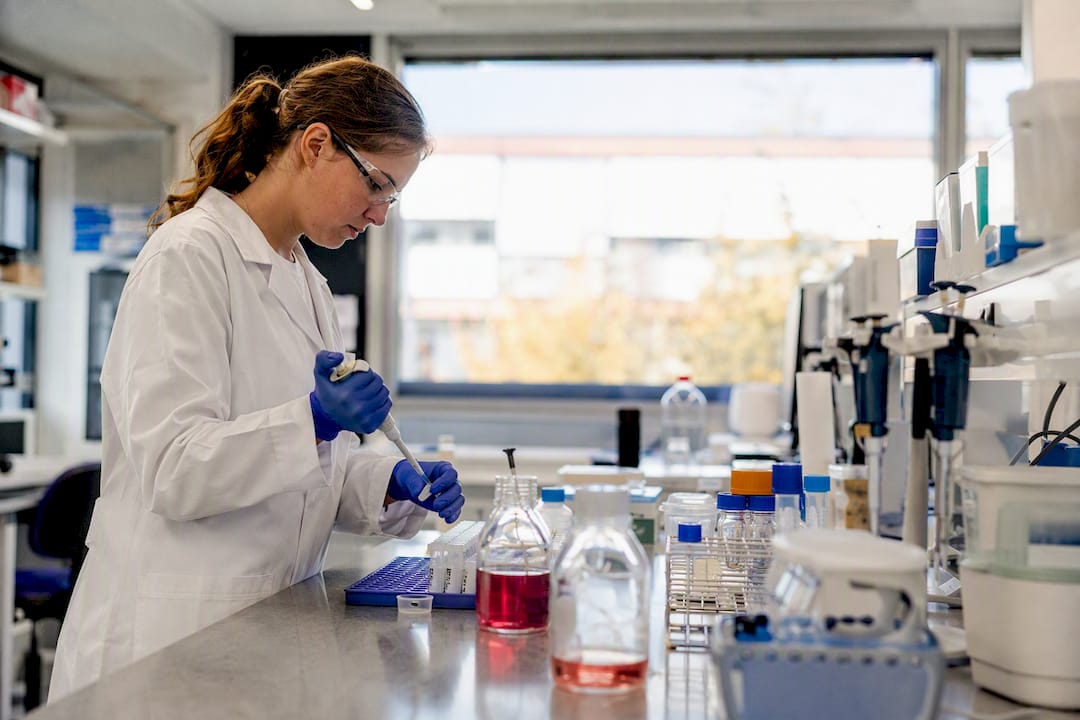
Phospho-targets need particular care. As Precision Biosystems notes, milk and casein-based blockers routinely produce false positives with phospho-specific antibodies because casein itself is phosphorylated. BSA or a protein-free blocker paired with TBST is the safer combination when alkaline phosphatase detection is involved, since AP activity is inhibited by phosphate ions present in PBS.
Detection chemistry changes the calculation again. HRP-chemiluminescence tolerates most blockers reasonably well. Fluorescent detection is more sensitive to autofluorescence from certain blocking agents, and AP-based systems need the phosphate-free buffer discussed above. Membrane choice matters too: PVDF tends to bind protein more tightly than nitrocellulose, which can mean slightly longer or more concentrated blocking is needed to achieve equivalent coverage.
Typical starting concentrations for many laboratories are milk, BSA, and PVP at suitable levels, with incubation times ranging from 30 minutes to an hour at room temperature or longer at 4°C for delicate antibodies.
- Match blocker species to avoid cross-reactivity with your primary or secondary antibody
- Choose BSA or protein-free blockers with TBST for phospho-targets and AP detection
- Account for PVDF’s stronger protein binding when setting blocking time
- Keep the same buffer system (PBS or TBS) across blocking, antibody dilution, and washes
Pro Tip: Switching buffer systems midway through a protocol, for instance blocking in PBST but diluting your primary antibody in TBST, is one of the most overlooked causes of inconsistent Western blot results. Pick one system before you start and use it throughout.
How do you design a quick blocking buffer optimisation test?
You do not need a week-long experiment to settle a blocking buffer question. A single run comparing three or four candidates, scored properly, usually gives you a clear answer.
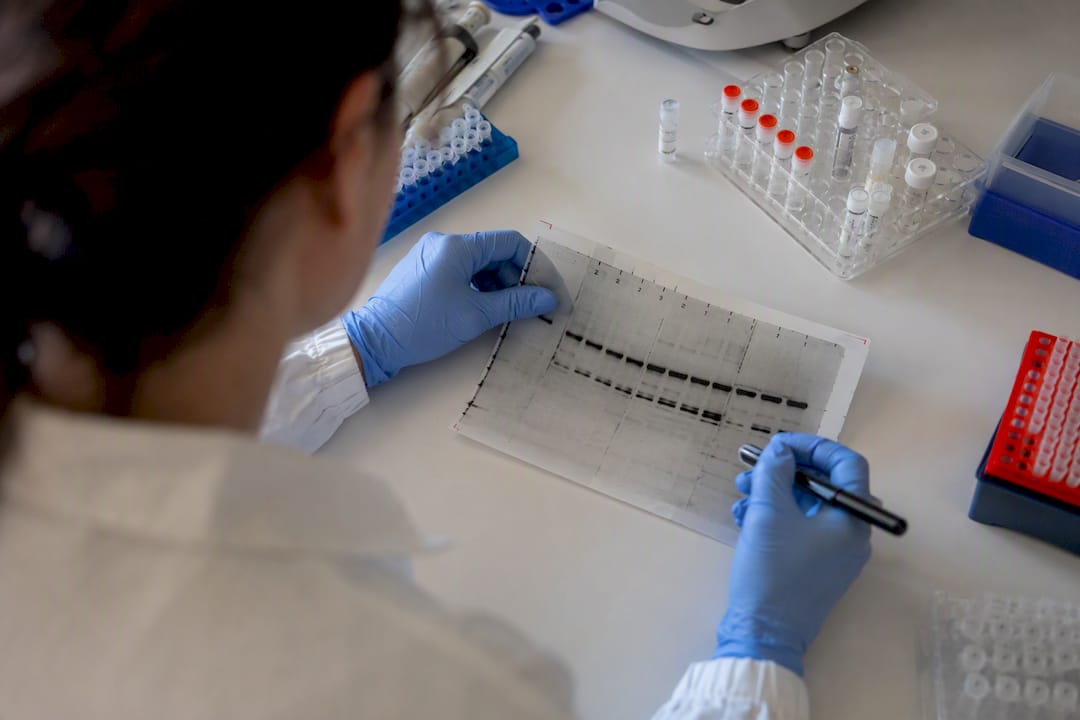
Set up a test membrane with the same lysate and antibody pair across four lanes, using 5% milk in PBST, 3% BSA in PBST, a protein-free blocker in TBST, and 1% PVP in PBST. This spread covers the major chemistries described in the LI-COR blocking buffer optimisation protocol, which recommends this kind of side-by-side comparison rather than relying on a single default recipe. Include a positive control lane with known target expression and a negative control to catch non-specific binding independent of your antibody.
Cover each membrane section with an adequate volume of blocking buffer to ensure good coverage, incubate for an appropriate period at room temperature or longer for sensitive targets, and keep the membrane on a gentle rocker throughout.
- Prepare four candidate blockers alongside positive and negative control lanes
- Block each section under identical volume, time, and agitation conditions
- Detect and image all lanes together under the same exposure settings
- Score each lane on signal-to-noise ratio, number of non-specific bands, and target-band intensity
- Record every result, even the failures, so the next antibody you test benefits from the data
Scoring rubrics that weigh signal-to-noise ratio and reproducibility across replicates consistently outperform single-run intensity readings when it comes to picking a blocker that holds up on repeat experiments.
Common pitfalls and how to fix them
Most background problems trace back to one of five causes, and each has a specific fix rather than a general “block longer” response.
- Diffuse background across the whole membrane: Usually old or contaminated blocking solution. Prepare it fresh each session and filter if particulates are visible.
- Small target bands look faint or missing: The blocker concentration may be too high, physically masking the epitope. Try PVP or reduce the protein blocker concentration.
- Extra unexplained bands: Often cross-reactive IgG from serum or lower-grade BSA. Switch to a highly purified BSA or a protein-free blocker.
- Weak or absent signal with AP detection: Check whether your buffer system contains phosphate, which inhibits alkaline phosphatase directly. Move to TBST.
- Residual smearing after blocking looks fine: Usually inadequate washing. Increase wash volume, extend wash time, or confirm your detergent concentration is correct.
How ABMIUM supports reliable blocking buffer decisions
Reagent inconsistency is a quieter cause of failed optimisation than most researchers assume, and it sits upstream of blocking buffer choice entirely. If your primary or secondary antibody has undocumented provenance or unverified specificity, no blocking strategy will fix the resulting background.
ABMIUM addresses this directly through verified antibody sourcing, pre-purchase validation, and independent validation services, so the variable you are testing is genuinely the blocker, not an unreliable antibody batch. When running the optimisation protocol above, ordering a small test quantity of a documented secondary antibody with a clear specification sheet removes one source of ambiguity from your results before you even touch the blocking buffer.
- Verified sourcing means the antibody’s origin and specifications are documented, not assumed
- Pre-purchase validation reduces the risk of discovering a poor-performing lot mid-experiment
- Product pages list working specifications you can reference when pairing antibody and blocker choice
- A prestained protein marker alongside your test lanes confirms transfer quality independent of blocking performance
| Point | Details |
|---|---|
| Reagent uncertainty compounds blocking problems | An unverified antibody batch can mimic a blocking buffer failure, wasting an optimisation run. |
| Documented specifications save time | Product pages with clear specificity data let you rule out the antibody as a variable early. |
| ABMIUM validation reduces guesswork | Pre-purchase validation and independent verification narrow down what’s actually causing background. |
What actually matters when selecting a blocking buffer
Most guidance on this topic treats blocking buffer selection as a matter of following a checklist: match the species, avoid milk for phospho-targets, keep the buffer system consistent. All of that is correct, and none of it is where researchers actually lose time.
The real gap is that labs skip the optimisation step entirely and default to whatever blocker is already prepared in the cold room. A four-lane comparison test costs one afternoon and one membrane. Skipping it costs weeks of chasing inconsistent bands across repeat experiments, often while quietly assuming the antibody itself is at fault.
The second underrated factor is reagent provenance. Researchers will meticulously optimise blocking conditions while running an antibody with no documented validation history, then wonder why results still will not reproduce between batches. Blocking buffer choice only pays off when the antibody behind it is a known quantity.
If you take one thing from this, let it be this: treat the short optimisation protocol as a default step for any new antibody-antigen pairing, not a fallback reserved for when things go wrong. It is cheaper than the alternative.
— Veron
Order verified reagents to support your optimisation run
Once you have settled on a blocking strategy, the antibody you pair it with matters just as much. ABMIUM is built for researchers who need to know exactly what they are buying before it reaches the bench, not after a failed blot forces a rerun. Every listing includes verified sourcing and pre-purchase validation, so the antibody performance data you are relying on during optimisation actually reflects what arrives in the vial.

This matters most when you are running the kind of side-by-side blocker comparison described above: the fewer unverified variables in your test lanes, the faster you land on a genuine answer. Beyond the main catalogue, ABMIUM offers independent validation services for labs that want a second check on a critical reagent before committing to a full experimental run, plus institutional pricing for teams ordering across multiple projects. Browse the antibody and reagent catalogue to find a documented option for your next optimisation test, or request validation support directly if a current reagent’s performance is in doubt.
Sources
- Block, Stock and Barrel – A guide to choosing your blocking buffer
- How to select the correct blocking buffer for Western Blotting - Precision Biosystems
- Blocking buffer optimization protocol
- IHC/ISH Super Blocking - Ancillaries & Consumables
FAQ
Should I use PBST or TBST for Western blotting?
Use TBST when running alkaline phosphatase detection or phospho-specific antibodies, since phosphate in PBST inhibits AP activity. PBST works well for standard HRP-chemiluminescence.
How long should I incubate in blocking buffer?
Typical incubation runs 30 minutes to an hour at room temperature or longer at 4°C for delicate antibodies.
What causes high background despite correct blocking?
Common causes include old or contaminated blocking solution, cross-reactive IgG in serum-based blockers, or inadequate washing. Unverified antibody quality can also mimic a blocking failure.
Can I use the same blocking buffer for IHC and Western blot?
Not always. IHC and ISH workflows often benefit from proprietary protein-free “super-blocking” formulations that also double as antibody diluents, which differs from typical Western blot practice.
How does ABMIUM help with blocking buffer optimisation?
ABMIUM’s verified sourcing and pre-purchase validation remove antibody uncertainty from optimisation tests, so results reflect the blocking buffer choice rather than an unverified reagent batch.